How to Recover Abandoned Carts Without Annoying Shoppers
A practical sequence for cart and browse recovery that wins back sales while protecting your brand and margins.
Quick answer
Abandoned cart recovery works best as a short sequence: a reminder within an hour, reassurance the next day and, only if margins allow, a modest incentive. Fixing checkout friction first usually recovers more than discounts.
Key takeaways
- Fix shipping-cost surprises and forced account creation before adding discounts.
- Send the first reminder within an hour while intent is still high.
- Use incentives sparingly so shoppers do not learn to wait for them.
Why do shoppers abandon their carts?
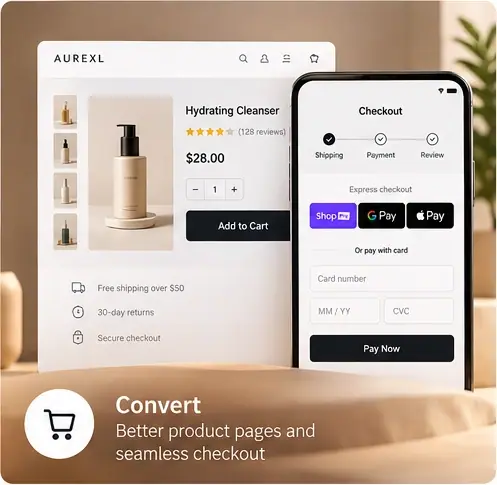
The most common reasons are unexpected shipping costs, a required account, slow or confusing checkout, and comparing options. Before building automations, test your checkout on a phone as a first-time buyer and remove every surprise.
What does a good recovery sequence look like?
Keep it short and useful.
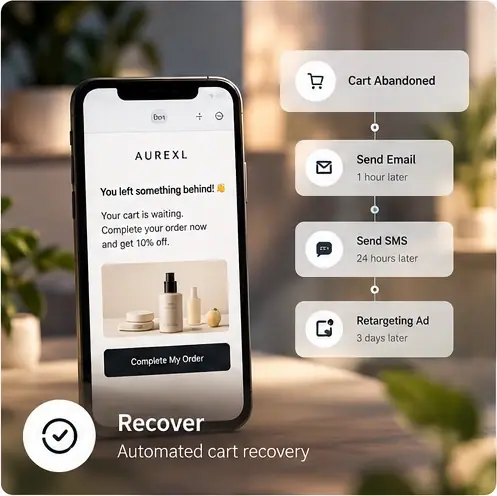
- Within 1 hour: a simple reminder showing the product, price and a direct link back to the cart.
- Next day: answer common objections — delivery times, returns, sizing or reviews.
- Day 3 (optional): a modest, time-limited incentive for higher-margin products only.
How should you measure cart recovery?
Track recovered revenue, recovery rate and unsubscribes per message. If unsubscribes rise or discounts become routine, shorten the sequence or drop the incentive.
Follow AUREXL